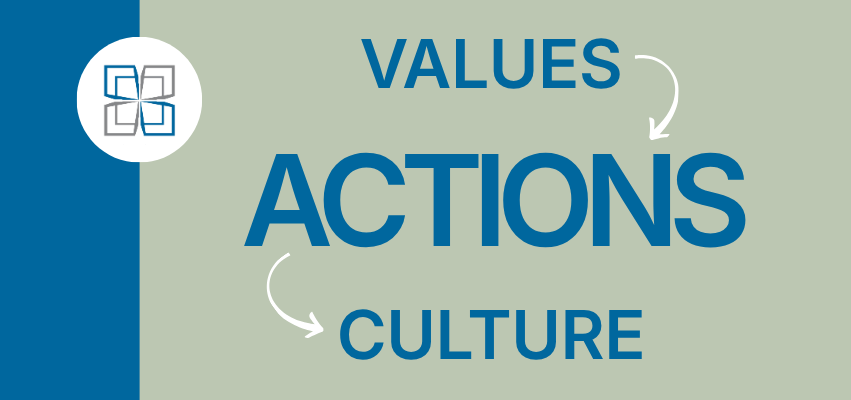
Your Values Aren’t Your Culture.
Your Actions Are.
5 practical ways to turn company values into everyday workplace behaviors.
Most organizations have values. They might be displayed on the website, included in an employee handbook, or introduced during onboarding.
But having values and living them are two very different things.
Workplace culture isn’t created by a great mission statement or a carefully chosen list of words. It’s shaped every day by the behaviours your organization encourages, the expectations leaders set, the decisions managers make, and the experiences employees have.
So, how do you make sure your values are actually influencing your workplace?
1. Turn Values into Behaviors
Words like integrity, teamwork, accountability, and respect sound great—but what do they actually look like at work?
Define the behaviors that demonstrate each value. If accountability is important, does that mean meeting commitments, communicating when something is off track, and taking ownership of mistakes? If teamwork matters, does it mean sharing information, stepping in to support a colleague, asking for help when it’s needed, and recognizing that individual decisions can impact the rest of the team?
Make your values specific enough that employees can recognize them in action.
2. Build Them into the Employee Experience
Values shouldn’t disappear after orientation. Look for opportunities to incorporate them throughout the employee lifecycle—from recruitment and onboarding to performance conversations, recognition, development, and even exit interviews.
During recruitment, for example, behavioral interview questions can help you explore whether a candidate’s approach aligns with how your organization operates. During performance reviews, values can become part of the conversation about not only what an employee accomplishes, but how they accomplish it.
3. Equip Managers to Lead by Example
Employees often experience workplace culture most directly through their manager.
That makes leaders one of the most important influences on whether organizational values become meaningful or simply remain words on a page. Managers need clear expectations, practical tools, and support to demonstrate those values consistently—especially when navigating difficult conversations, recognizing employees, making decisions, or managing performance.
Consistency from leadership builds credibility.
4. Make Sure Your Policies Match Your Values
Your policies and workplace practices send powerful messages about what your organization actually values.
If you say you value trust but create unnecessarily restrictive processes, or emphasize accountability without clearly defining expectations, employees may experience a disconnect between what the organization says and what it does.
Review policies and practices through the lens of your values. Ask yourself: Does the way we operate reinforce the culture we say we want?
5. Ask Employees What They’re Actually Experiencing
Leaders experience an organization differently than employees do—which means assumptions about workplace culture don't always tell the whole story.
Engagement surveys, employee check-ins, one-on-one conversations, and other feedback opportunities can help identify gaps between your intended culture and the actual employee experience.
The important part is what happens next. Listen for patterns, communicate what you’ve heard, and take meaningful action where opportunities exist.
Values Should Be More Than Words
Your values should help guide how you hire, lead, recognize, develop, and support your people—not just how you market your business.
When your HR practices, leadership behaviors, policies, and employee experience consistently reinforce the same values, culture becomes much more intentional.
Not sure if your workplace practices reflect the culture you want to create?
Two Twelve Consulting can help you take a closer look. Through our Exclusive Client Partnership program, we support our clients with HR policy review and development, 360 and engagement surveys, leadership support, training and development, and more. We help Peace Country businesses identify gaps, strengthen their people practices, and intentionally build workplaces where both employees and businesses can thrive.
Because a strong culture isn’t something you simply define. It’s something you demonstrate—every day.